Office Restrooms Still Smell After Nightly Cleaning? Where the Odor Hides
Quick Answer: When an office restroom still smells after nightly cleaning, the source is almost never the surface that gets wiped. Odor usually lives in places a mop and spray bottle do not reach: urine absorbed into grout lines and tile joints, dried or biofilm lined floor drains, the base of the toilet and urinal fixtures, wall seams behind them, and the mop and cloths themselves. Masking the smell with fragrance only delays its return. Lasting results come from removing the soil, treating it with the right product given enough contact time, and checking the drain traps and ventilation that keep the room from drying out.
You walk into the second floor restroom at 8:15 on a Tuesday and it hits you before the door closes. The floor looks clean. The sinks are spotless, the mirrors are streak free, and the trash is empty. The cleaning crew was in last night, and you know it, because the checklist on the wall is initialed. Yet the room smells like a bus station by midmorning, and by Thursday your tenants or your staff are asking about it.
This is one of the most common complaints a facility manager deals with, and it is also one of the most misunderstood. The instinct is to ask the crew to clean more often, or to add an air freshener, or to switch chemicals. Sometimes those things help a little. More often they do not, because the problem was never the visible surface. The odor is coming from somewhere the nightly routine is not designed to reach.
Here is where it actually hides, why a standard nightly clean leaves it behind, and what a crew has to do differently to get rid of it.
Why a Clean Looking Restroom Can Still Smell
A restroom smells because something organic is sitting somewhere and bacteria are feeding on it. That is the whole mechanism. Urine, splashes, and moisture break down and release ammonia and other compounds, and the bacteria that colonize those deposits keep producing odor for as long as they have a food source and a damp place to live.
Restrooms are close to ideal for this. They are warm, they are humid, and they are used by dozens of people a day. A surface can look perfect and still hold a thin layer of soil in the tiny pores and seams of the material. Wiping the top of a surface moves the visible film around. It does not pull out what has soaked in.
That is the first thing to understand about a stubborn odor: it is a soil problem, not a fragrance problem. If the soil stays, the smell stays.
Hidden Source One: Grout Lines and Tile Joints
Grout is porous. It behaves a lot like a hard sponge, and in a restroom floor it is constantly exposed to liquid, especially around toilets and urinals. Over months, urine and cleaning solution that was never fully rinsed away seep into those lines and dry there.
Once it dries, it becomes a stable reservoir. Each time the floor gets damp again, whether from a mop or from humid air, the deposit rehydrates and releases odor. This is why a restroom can smell fine at midnight right after cleaning and smell worse by the afternoon. The mop wet the floor, and the wet grout woke the odor back up.
What the Crew Sees
Dark grout around fixtures, yellowish tile near urinals, and stronger odors when floors are damp indicate soil buildup. A white cloth turning gray or tan confirms contamination.
What Fixes It
Apply restroom appropriate cleaner, allow sufficient dwell time, and agitate grout thoroughly. Extract loosened soil and cleaning solution instead of spreading dirty water across tiles with mops.
Hidden Source Two: Floor Drains
If your restroom has a floor drain, it deserves its own look. A drain is a wet, dark, protected space where hair, soap film, and organic debris collect, and bacteria form a slimy layer along the walls of the pipe. That layer, often called biofilm, produces a persistent swampy smell that no amount of surface mopping will touch.
There is a second drain problem that has nothing to do with cleaning. Every drain has a trap, a curved section that holds a small plug of water to block sewer gas from rising into the room. In a restroom that is rarely used, or during a stretch of dry winter air, that water can evaporate. When the seal is gone, the room smells like a sewer, and the smell is coming straight out of the pipe.
What the Crew Sees
Strong drain odors, visible buildup beneath drain covers, or worse smells in rarely used restrooms often indicate biofilm accumulation or a dry trap.
What Fixes It
Use enzyme based products regularly to break down biofilm. Refill dry traps monthly with water. Persistent odors require plumbing inspection to identify underlying problems.
TIP: Ask your crew to pour a quart of water down every floor drain in low traffic restrooms on a set day each month. It takes seconds, and it restores the seal that keeps sewer gas out of the room.
Hidden Source Three: The Base of Toilets and Urinals
Look at where a toilet meets the floor. There is a seam there, usually caulk or a bead of sealant, and behind and beneath the bowl are bolt caps, a flange, and a gap that rarely gets wiped. Splashes and drips travel down the outside of the fixture and into that seam. Over time the sealant can crack or separate, and the liquid ends up under and behind the bowl where no one can see it.
Urinals are even more demanding. Urine splashes onto the wall behind and beside the fixture, runs down to the floor, and collects at the wall base. The area beneath a wall hung urinal is a classic hotspot, as are the partitions nearest the urinal bank, where overspray lands on the bottom few inches.
What the Crew Sees
Odors concentrated near walls or corners, stained caulk, and soil buildup on lower stall divider panels indicate neglected edges and seams.
What Fixes It
Clean behind fixtures, scrub wall bases and lower partitions, and treat seams. Persistent odors after deep cleaning may require resealing by maintenance staff.
Hidden Source Four: The Cleaning Tools Themselves
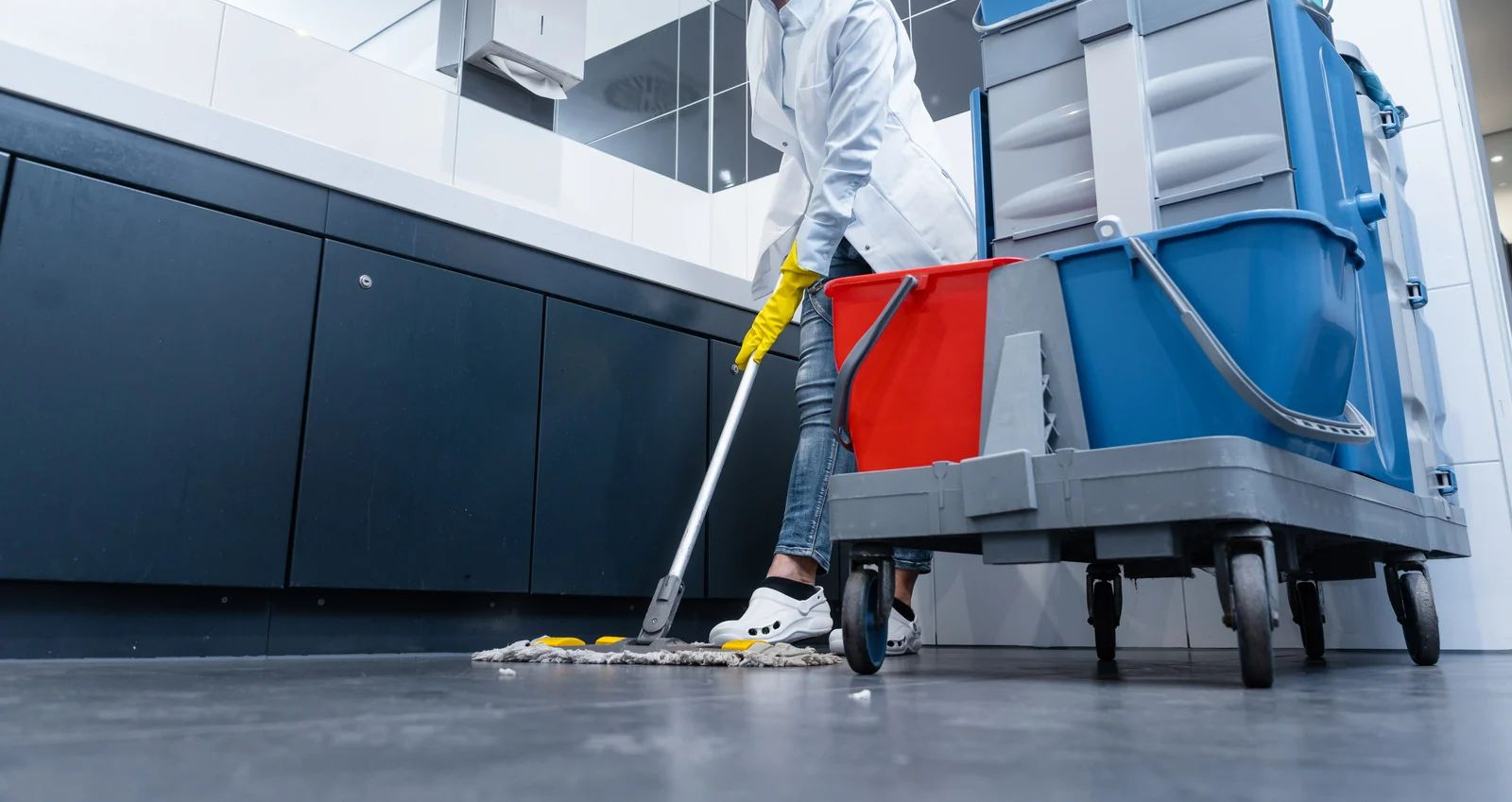
This one surprises people. A single mop and a single bucket used across several restrooms, or across a restroom and then a break room, move bacteria from room to room. A mop that is not fully cleaned and dried between uses starts to smell itself, and every time it touches a floor it deposits a faint version of that smell.
Cloths work the same way. If the same cloth wipes a sink, a counter, and a toilet seat, the odor is carried across the room, and the crew is spreading the source instead of removing it.
What the Crew Sees
Sour mop closet odors, persistently damp mop heads, and restrooms smelling worse after cleaning indicate contaminated tools or improper cleaning practices.
What Fixes It
Assign color coded tools, use fresh solution for each restroom, and launder or replace cleaning equipment regularly to prevent odors from returning.
Hidden Source Five: Airflow, Humidity, and Winter Conditions
Even a spotless restroom will hold odor if the air does not move. An exhaust fan that is clogged with dust, running at a fraction of its capacity, or switched off at night leaves moist air sitting in the room, and moisture is what keeps the bacteria active.
Winter adds its own wrinkle in the Twin Cities. Buildings are sealed tight from November through March, makeup air is limited, and heated, closed up spaces trap whatever smell is already there. A restroom that seems fine in October can start to feel stale in January with no change in the cleaning routine at all. Wet boots and slush tracked in from the parking lot also add moisture and grit to restroom floors, which gives odor more places to settle.
What the Crew Sees
Lingering stale odors, condensation on mirrors or walls, and weak tissue movement near the grille indicate poor ventilation and insufficient airflow.
What Fixes It
Clean fan grilles, confirm operation during occupied hours, and report weak airflow. Building maintenance must inspect and repair faulty ventilation equipment when necessary.
Why Nightly Cleaning Alone Misses All of This
A standard nightly restroom clean is built for the visible. Empty the trash, restock the paper and soap, wipe the sinks and mirrors, disinfect the touch points, clean the toilets and urinals, mop the floor. That routine keeps a restroom presentable, and it should happen every night.
It is not designed to pull soil out of grout, treat a drain, or detail the seam behind a fixture, because those jobs take longer, need different products, and require dwell time that a quick nightly pass does not allow. They are periodic tasks, and they belong on a schedule of their own, whether that is weekly detail work or a deeper restroom treatment every month or quarter, depending on how heavily the room is used.
WARNING: Do not respond to a persistent restroom smell by adding stronger fragrance or a heavier chemical. Perfume layered over bacteria produces a worse smell once it fades, and mixing or overusing cleaning products in a small, closed room can irritate eyes and lungs. If a smell sticks around, the next step is finding the source, not covering it.
How to Find the Source Yourself in Ten Minutes
You do not need special equipment to narrow it down. Walk the restroom with a simple routine.
Smell Low, Not High
Crouch down near each fixture and along the base of the walls. Odor from a hidden source is almost always concentrated near the floor.
Check The Drain
Lift or look into the drain cover and check for buildup. Pour a cup of water in and see whether the smell changes in the next few minutes.
Press A White Cloth Along Grout And Caulk
Soil that comes up on the cloth confirms an absorbed deposit.
Look Behind And Beside The Urinals
Check the wall base and the lower inch of each partition.
Check The Fan
Hold a single sheet of tissue near the grille and see whether it is pulled toward it.
Open The Mop Closet
If it smells sour, the tools are part of the problem.
Take notes on which spot is strongest. That single detail tells a crew exactly where to put its time.
What a Crew Should Do When Odor Keeps Returning
When a smell survives your regular nightly service, a good provider changes the approach rather than just repeating it. Ask for a sequence like this.
Treat, Then Dwell
Apply appropriate cleaners to floors, grout, and fixture bases, allowing sufficient dwell time.
Agitate and Extract
Scrub grout and wall bases, then extract loosened soil using appropriate equipment.
Address the Drains
Treat drains with enzyme based products and confirm traps retain sufficient water.
Detail the Seams
Clean thoroughly around fixtures, behind fixtures, lower partitions, and wall base seams.
Reset the Tools
Use fresh, color coded cloths and clean mop heads for every restroom.
Build a Periodic Schedule
Schedule recurring grout and drain treatments to prevent odors returning between deep cleans.
Then follow up. A restroom that smells good the morning after a deep treatment and still smells good two weeks later is solved. One that drifts back in three days still has a source nobody found, and that is the signal to look harder at plumbing, sealant, or ventilation.
Frequently Asked Questions
Why does my restroom smell worse in the afternoon than right after cleaning?
Damp floors reactivate odor trapped in grout and porous surfaces. The mop wets the floor, the moisture wakes up the dried soil, and the smell rises as the day goes on and traffic increases.
Will air fresheners or odor neutralizers solve the problem?
They cover it for a short time. Once the fragrance fades, the bacteria and soil are still there, and the smell returns. Removing the source is the only lasting fix.
How often should restroom grout and drains be treated?
It depends on traffic. A busy restroom usually benefits from a periodic deep treatment on a monthly or quarterly rhythm, with drains treated on a regular schedule. A low traffic restroom may need less, but its drain traps still need water added now and then.
Is a sewer smell a cleaning problem or a plumbing problem?
It can be either. A dry trap or a dirty drain is within a cleaning crew's reach. If the smell returns after the trap is refilled and the drain is treated, a plumber should inspect the venting and the trap.
Can the cleaning supplies themselves cause a smell?
Yes. A mop that stays wet, a cloth that is reused across areas, or a sour bucket will leave a faint odor with every pass. Fresh, color coded tools prevent this.
Should I ask for more frequent nightly cleaning?
More visits will not fix an odor that lives in grout, drains, or fixture seams. A change in method, with dwell time, extraction, and detail work on a schedule, does far more than an extra pass with the same routine.
A Cleaner Restroom Starts With Finding the Source
A restroom that still smells after a thorough nightly clean is pointing to something specific. The soil is sitting where the routine does not reach, and repeating the same pass will not uncover it. Grout, drains, fixture bases, cleaning tools, and airflow are the places worth checking, and each one has a practical fix. Once the right work is added to the schedule, the odor stops rebuilding between visits and the room stays fresh through busy weeks and sealed up winter months alike.
The good news is that this problem is solvable, and it tends to stay solved once the periodic work is in rotation. NVM Facility Services
brings 7
years of experience to Coon Rapids, MN, and that time has shown that lasting results come from removing soil, treating drains, and detailing seams instead of covering smells. Find the source, treat it properly, and keep the deeper tasks on a steady rhythm, and the restroom stops being the room people mention in tenant surveys.